
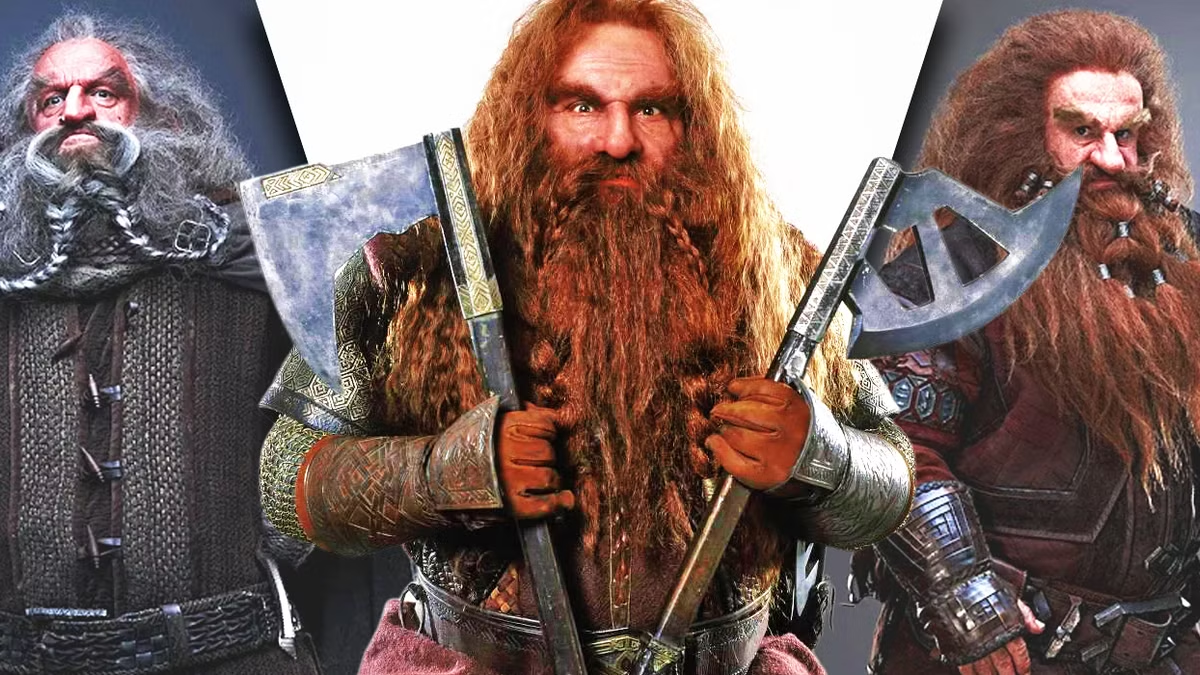
How to Play Gimli in DnD
A lot of people hear “play Gimli in D&D” and immediately build the most generic dwarf possible. Big beard, big axe, louder than necessary, probably yelling about ale every twenty minutes as if dwarf roleplay were legally required to come with a tankard.
That gets you the surface. It does not really get you Gimli.
Gimli is proud, stubborn, and very dangerous, obviously, but he is also deeply loyal, more emotionally open than people give him credit for, and a lot funnier than the standard “grumpy warrior” copycats. He does not work because he is short and angry. He works because he has convictions, strong personal ties, and enough confidence to stand next to heroes who are more conventionally mythic without turning into dead weight or comic relief.
That last part matters in D&D. If you reduce the fantasy to “dwarf who likes axes and drinking,” the character will become repetitive in about two sessions. However, if you focus on pride, craftsmanship, loyalty, stubborn courage, and the willingness to do something wildly dangerous for a friend, you get a character who can actually carry a campaign.
So yes, start with the dwarf and the axe. Just do not stop there.
The Important Parts Are Pride, Loyalty, and Competence
The best way to understand the Gimli fantasy is to look past the visual stuff for a minute. The helmet, beard, and weapon are easy. The real core is what kind of person he is.
He is proud of where he comes from. That does not have to mean endless speeches about dwarven greatness, though. It can be quieter than that. He notices craftsmanship. He cares whether things are built well. He takes insults to his people personally, even when he tries not to show it. That kind of pride gives the character shape.
Then there is the loyalty. Gimli is a great party character because once he is with people, he is with them. Fully. He is not waiting for an excuse to go brood alone in a tunnel. He is not secretly evaluating whether the group deserves him. He commits. In D&D, that is gold.
And then there is the competence. He is not the elegant one, the mysterious one, or the chosen one. He is the reliable one. He shows up, fights hard, takes the hit, and does not need the story to constantly revolve around him to remain important.
On the flip side, if you only play the pride without the warmth, the character can become exhausting. Nobody wants three months of “my dwarf insults elves and complains about everything.” One joke about long legs is fine. A personality made entirely from fantasy racism is less fine.
Fighter Is the Cleanest Choice, but Barbarian Works Too
Fighter is probably the easiest class for a Gimli-style character because it covers the most obvious parts without forcing extra baggage into the build. You are durable, dangerous, and useful in every straightforward fight, which already gets you most of the way there.
Battle Master works especially well if you want the character to feel like a seasoned warrior rather than a guy who simply swings harder than everyone else. It adds some technical edge, and that fits a character who knows how to fight instead of just how to yell before fighting.
Champion can also work if you want something simpler. There is nothing wrong with simple when the fantasy is “extremely reliable warrior who is hard to put down.” Not every build needs to look like a tax form.
Barbarian is the stronger choice if you want the more forceful, relentless version. That can fit, especially if you picture Gimli as the one who barrels forward with terrifying commitment once the battle starts. However, I would be careful with Barbarian if it pushes you toward the usual low-Intelligence brute stereotype. Gimli is stubborn, not clueless.
I would still start with Fighter unless you really want the tougher, more explosive energy. The class also leaves more room to play the dwarf as disciplined, skilled, and dependable instead of just angry with hit points.
Do Not Make Him a Joke Character
This is where a lot of “Gimli-inspired” characters go bad.
The player decides the character is comic relief, which in practice means he drinks constantly, shouts a lot, and reacts to every social scene like a dwarf-shaped sound effect. There can be humor there, obviously. Gimli is funny. But he is funny because of how he interacts with other people, not because he is fundamentally ridiculous.
Let the humor come from confidence, rivalry, blunt honesty, and the occasional overcommitment to proving a point. If the elf says something graceful, the dwarf gets to roll his eyes. If someone underestimates him, he gets to enjoy proving them wrong. If he boasts a little too early and then has to back it up, even better.
Although, try not to make drinking his whole personality. A dwarf who enjoys ale is normal. A dwarf who treats every tavern like a competitive sport and every emotional beat like an excuse to scream for another barrel gets old fast. If you want to play him as someone who genuinely loves food, drink, stories, and good company, great. That actually helps the party dynamic. If you want him to challenge furniture to drinking contests, who am I to tell you how to have fun. But it probably will not get better as a bit the fifth time.
The bigger point is that Gimli works because he has dignity. If you turn him into a walking dwarf meme, the dignity disappears and most of the character goes with it.

Let Friendship Be Part of the Character
A Gimli-style character should get attached to people. That is one of the main reasons to play this fantasy in the first place.
He can start guarded, sure. He can be skeptical, proud, maybe a little too ready to assume the worst about people from rival cultures or old political enemies. That is fine. However, the point is that he changes through loyalty. He starts with strong boundaries and ends up crossing impossible distances for the people he loves.
That gives you a great shape for a D&D campaign. Maybe he starts out respecting the Paladin but not liking them. Maybe he thinks the Ranger is too polished to trust. Maybe the Wizard seems physically incapable of surviving outdoors. Then, over time, those relationships become real. He keeps count of old slights less and old loyalties more.
This also helps with roleplay because it gives the character something to do outside combat. He can praise good work, remember promises, defend his friends fiercely, and express affection in practical ways instead of speeches. Maybe he sharpens someone’s weapon without being asked. Maybe he quietly stands watch when another character is having a rough night. Maybe he insults a friend’s life choices while walking into danger right beside them. That is love, fantasy dwarf edition.
For the simplest version, play a Dwarf Fighter, probably Battle Master, and build from there. Give him a good weapon, a stronger sense of loyalty than he would ever admit out loud, and at least one opinion about craftsmanship that borders on religious belief. The axe matters, yes. The beard matters too. But the real heart of the character is that once he is your friend, he is your friend completely.
And honestly, that is a much better thing to borrow from Gimli than the drinking.


